Industry Background
Telecom base stations operate 24/7 and are among the largest energy consumers for operators. Electricity costs remain high, creating an urgent need for more effective energy-saving solutions.
As 5G deployment accelerates, the number of base stations has grown significantly, sharply increasing power demand.
5G stations have a smaller coverage area, requiring 3–4 times the site density of 4G and resulting in over 9× higher total energy consumption, driving operator costs upward.
Under carbon-neutrality targets, operators must reduce base-station energy consumption and increase the share of green power through on-site PV, green certificates, or local power trading.
Introduction to PV-Overlay (What It Is)
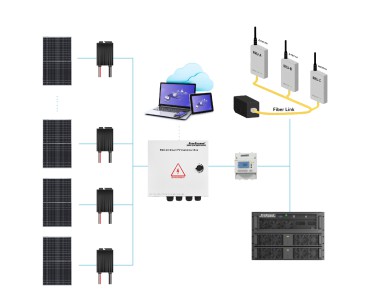
PV-Overlay integrates an additional photovoltaic system into the existing power architecture of a telecom base station, enabling hybrid “PV + Utility Grid” energy supply.
Key features include:
Utilizes roof, wall, and nearby open areas for PV installation; daytime PV power is prioritized to reduce grid consumption.
Consists of PV modules, PV-overlay MPPT controller, DC meter, and DTU/4G gateway.
Two system architectures are available: series configuration and parallel configuration.
Series PV-Overlay Architecture
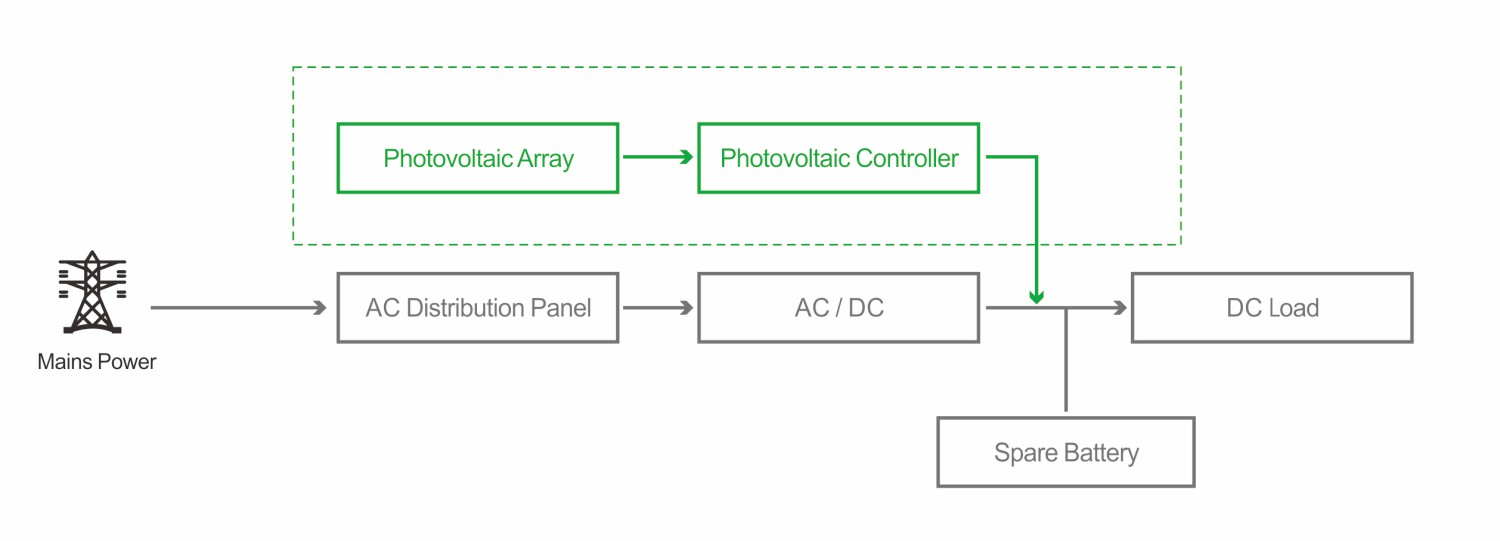
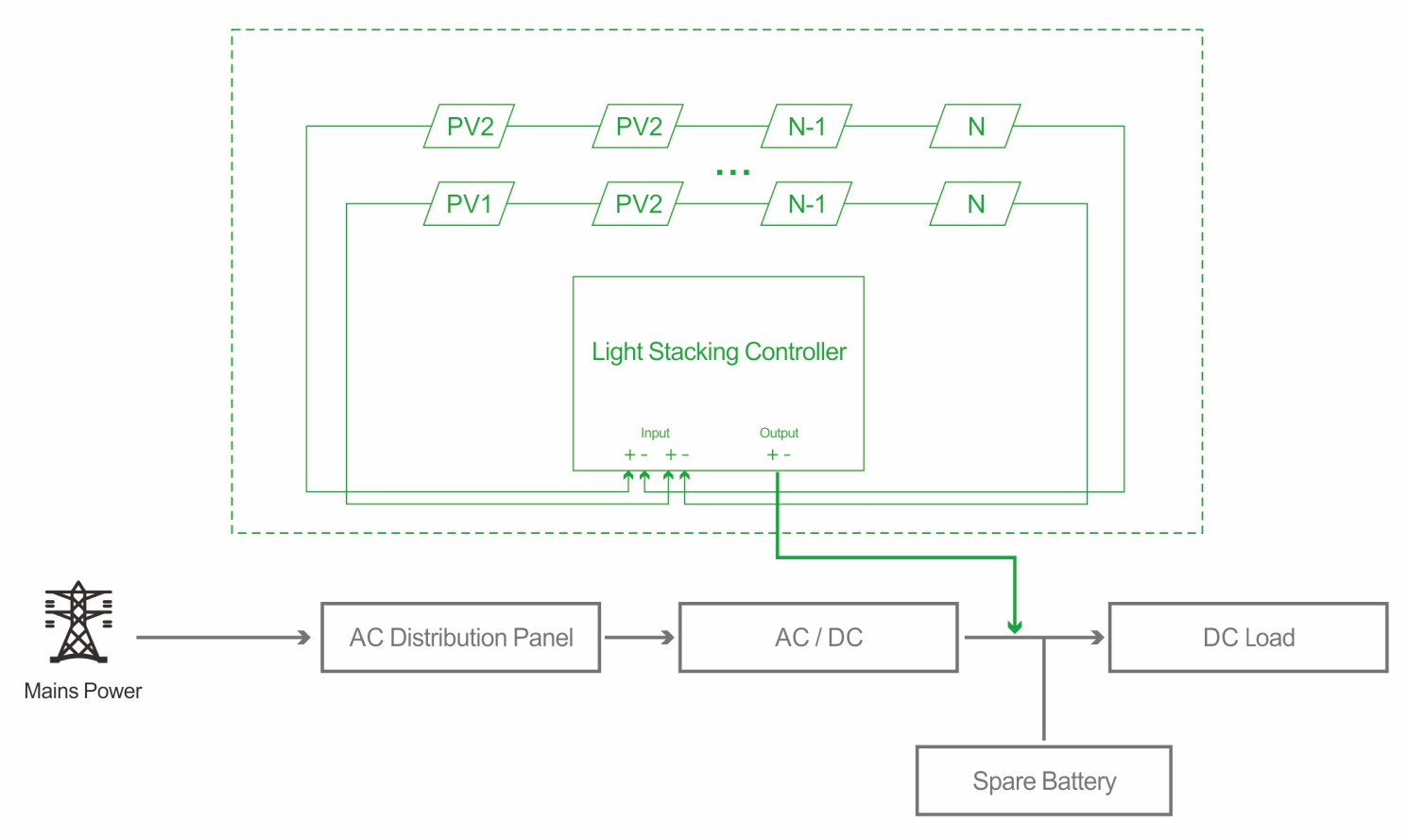
The series scheme groups multiple PV modules into strings that are connected to a centralized controller, which performs unified MPPT before delivering power to the DC bus.
Key Features
Multiple string input reduces cabling and material cost.
Compact design with fewer cables enables fast installation.
Advantages (Technology Strength)
Industrial-grade design with 8–10-year lifespan.
Ultra-high MPPT tracking efficiency up to 99.5% for better energy harvest.
Multiple protection layers ensure enhanced system reliability.
Wide input voltage range for flexible deployment.
Integrated metering, DTU, and distribution—reducing deployment complexity.
Cloud platform enables real-time monitoring, alarms, and remote O&M.
Parallel PV-Overlay Architecture
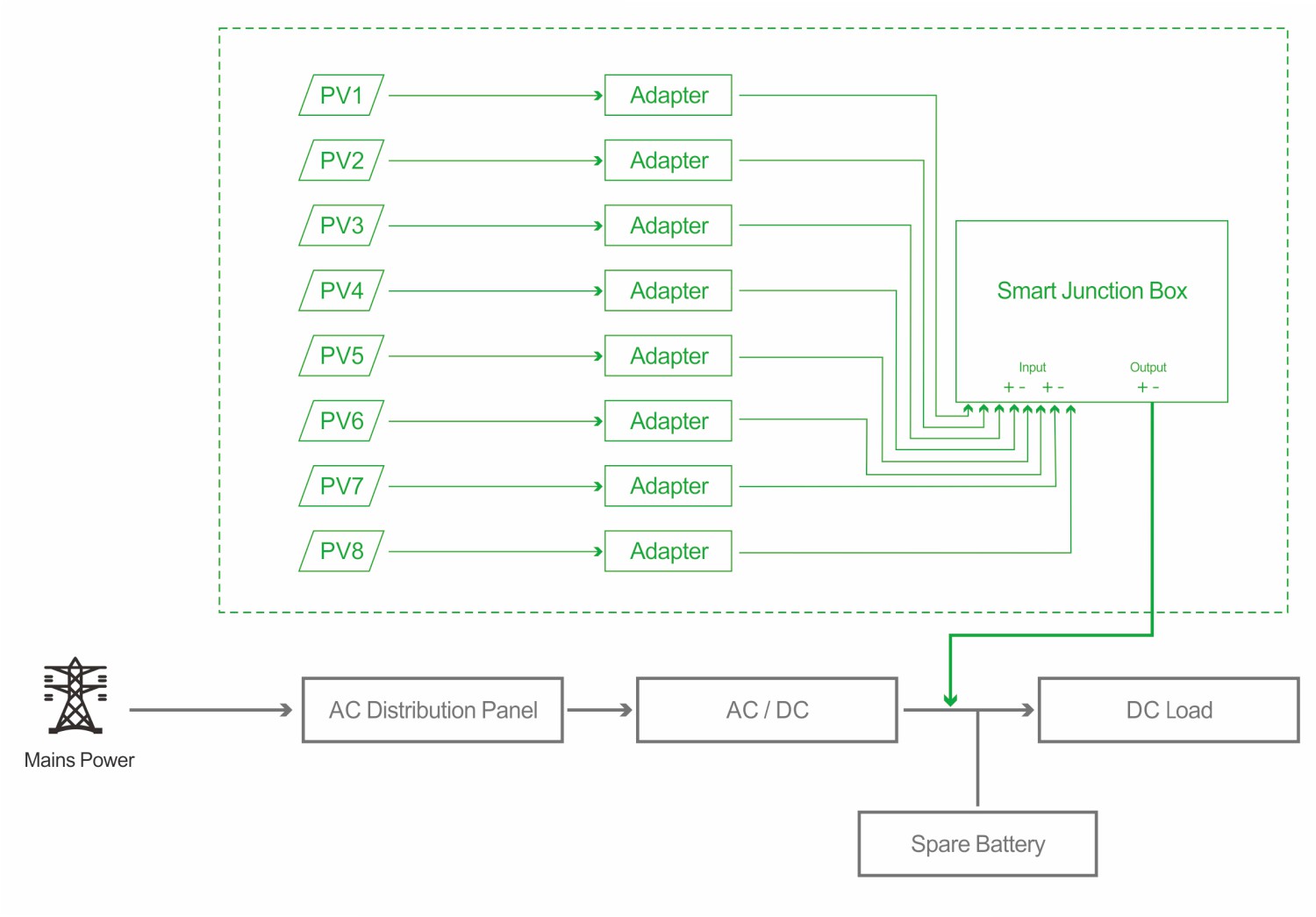
The parallel scheme assigns an independent MPPT controller to each PV module. All outputs converge into a smart combiner box before feeding the DC bus.
Key Features
Each module operates independently, minimizing energy loss from partial shading.
Power-line carrier communication enhances anti-interference performance.
High protection level ensures durability in harsh outdoor environments.
Advantages (Technology Highlights)
Industrial-grade lifespan of 8–10 years.
High conversion efficiency of over 98%.
Easy maintenance: local HMI, carrier communication, per-module monitoring, and real-time energy statistics.

One-Stop Solution
With advanced design and manufacturing facilities, our products are at the leading edge of power technology, employing state-of-the-art components and production technology.

All-Scenario Communications
An international network of sales and support facilities enables us to provide local customer support across technical sales, design engineering, operations & logistics.

Premium Quality Assurance
Quality assurance and control is involved at all stages to ensure that our products are of the highest quality and are safe & reliable.
Click the button below to start downloading